The first wave of enterprise AI made operations faster without making them different. A recommendation still needs a person to accept it; a summary still needs a person to act on it. The work moved earlier in the day, but it did not leave the queue.
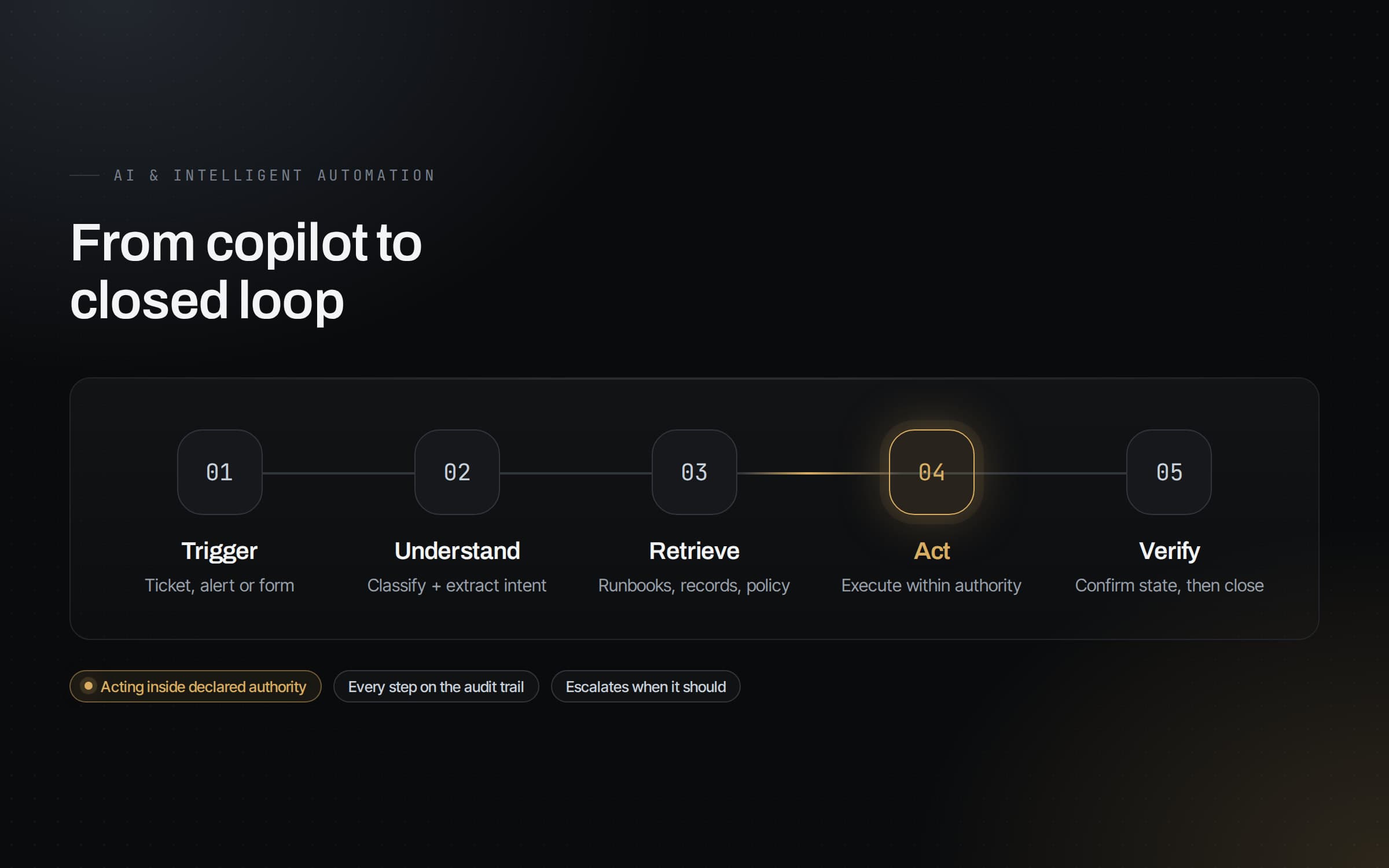
The second wave is not about better recommendations. It is about the conditions under which a system is allowed to finish the job itself — and those conditions are architectural, not conversational.
Three things have to be true
Authority has to be explicit. An autonomous system needs a stated boundary: which systems it may touch, which classes of change it may make, what blast radius is acceptable, and the point at which it must stop and hand over. A boundary that is implied by a prompt is not a boundary.
Evidence has to precede action. If the reasoning behind a change cannot be reconstructed afterwards — the signals, the correlation, the topology it was assessed against, the prior incidents it matched — then what you have is an unattributed change, whatever the interface calls it.
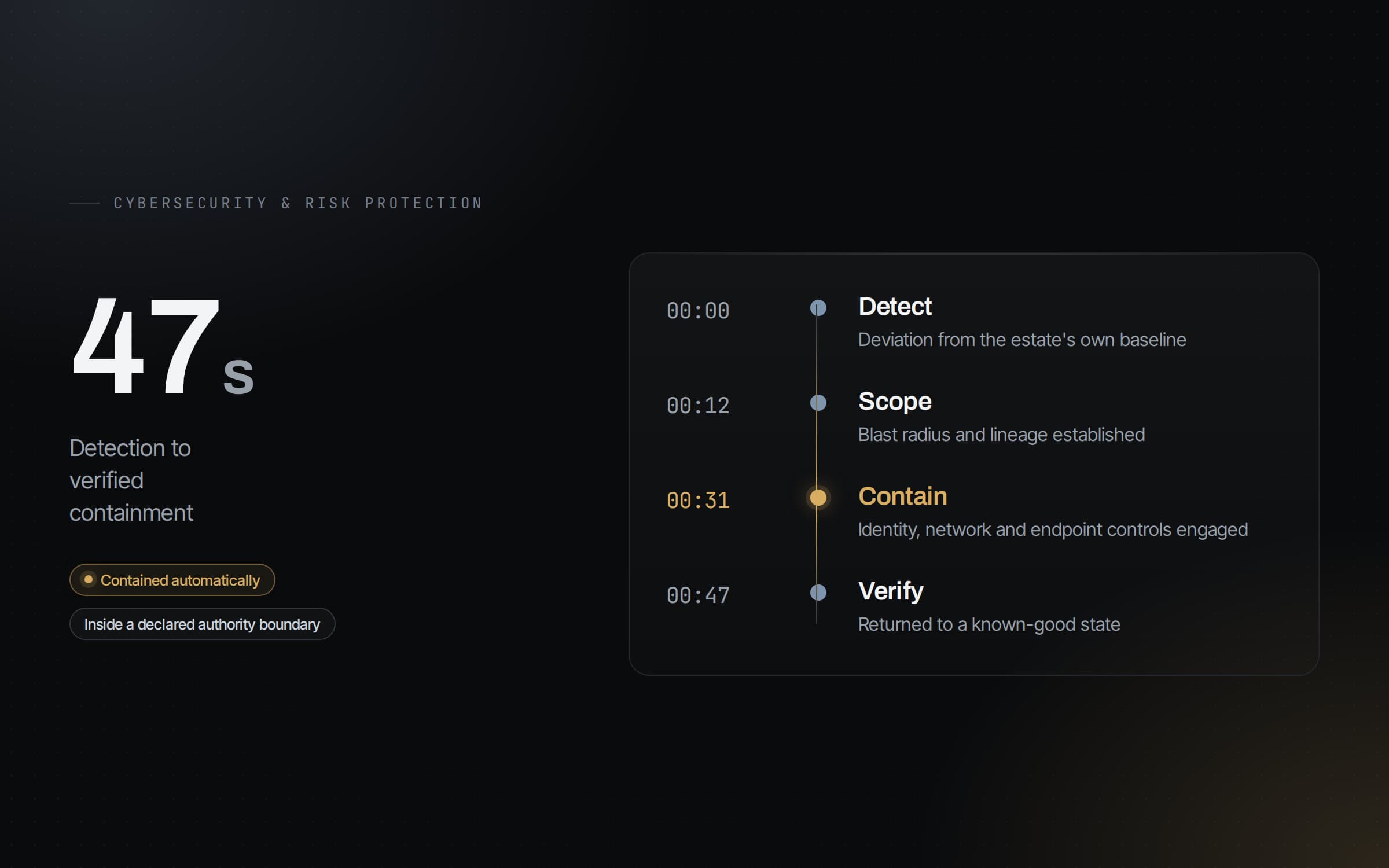
Reversal has to be designed. The realistic failure mode for an autonomous system is not catastrophe; it is a plausible action taken against a situation it misread. If every action carries its rollback and every execution is verified against expected state, that failure resolves itself into an escalation.
What this means for operations teams
The role does not disappear. It moves up a level: from resolving incidents to setting and reviewing the boundaries inside which incidents get resolved. That is a genuinely different skill, and most organisations underestimate how much of it has to exist before the first autonomous action is safe.
It also changes what a good week looks like. Volume handled stops being the measure. What matters is the proportion of work that closed inside policy, the proportion that escalated correctly, and — the number nobody wants to publish but everybody should track — the proportion that escalated late.
Where to start
Start with a class of work whose failure modes you already understand well, whose blast radius is small, and whose verification is unambiguous. Certificate rotation is a better first candidate than capacity management. Not because it is more valuable, but because you will know immediately whether it worked.
Widen coverage because the system earned it. Autonomy that expands on a schedule rather than on evidence is just a deadline with better branding.